
Monday, Jul. 25, 1988
Do-It-Yourself Financing
By Christine Gorman
|

|
When Do Van Tron escaped from Saigon to San Jose in 1982, no bank would take a chance on his business prospects. Do lacked a credit history, had no money and spoke no English. Today, however, the 31-year-old refugee publishes a Vietnamese-language newspaper, tools around town in a silver Jaguar and has started plans to build a shopping center. The reasons for his rapid rise: long hours of work, plenty of thrift and $4,800 in start-up capital from an unconventional source. Like thousands of other immigrants, the budding entrepreneur tapped an ethnic loan club for his seed money.
Such clubs amount to informal, small-scale banks organized primarily by immigrants to help one another. Though the loan clubs are not legally prohibited, they operate outside regular U.S. banking laws and safeguards. Even so, they have nurtured fledgling businesses from the barrio to Chinatown in cities as diverse as Houston, Los Angeles, Chicago and New York. With loans ranging from a few hundred dollars to $20,000 or more, Vietnamese hui (associations) in Texas played a crucial role in reviving the moribund shrimping industry in the Gulf of Mexico by financing the purchase of dozens of boats. An estimated $10 million in Korean keh (contracts) has financed the purchase of houses, restaurants and small grocery stores in the San Francisco Bay Area. "This is Horatio Alger all over," says David W. Engstrom, a research associate at the University of Chicago who studies immigrant merchants. Thanks to loan clubs, he adds, "most of these people open their businesses in three to four months after arriving here."
Most of the clubs operate on the same basic principle: a group of people, often ten or 20, contribute the same amount of money each month to a kitty, which is immediately loaned to one of them. All club members, including the borrower, continue to make the monthly payments until everyone has received the purse once. By that time, each participant has borrowed and repaid the entire loan. The organizer, who is typically female, keeps a record of payments and vouches for newcomers until the club disbands. "It's like Weight Watchers," says Ivan Light, a professor of sociology at the University of California, Los Angeles. "If you want to be in the group, you have to save money."
In one type of West Indian su-su (among us) in Brooklyn, for example, ten people contribute $200 a month for ten months. Though many clubs assign the pool by drawing lots, each $2,000 collection in this kind of su-su goes to the person who everyone agrees needs it most urgently. After ten rounds, each member has contributed ten $200 installments and received one lump-sum payment of $2,000.
In many of the more elaborate loan clubs, participants bid for the privilege of taking the pool. Whoever offers the highest interest rate wins, although each member can take the pot only once. The entire interest payment is immediately deducted from the fund and paid out to the other members. Rates can run as high as 20%, vs. about 14% for an unsecured bank loan. But the loan club may be an immigrant's only source of funds. "I would have spent months convincing a bank that my expansion plan made sense," says a New York City printer from Jamaica who wanted to add a color-lithography machine to his business. Instead, he borrowed $18,000 at 15% interest from a loan club to buy the equipment. As a result, his annual revenues have more than doubled, from $27,000 in 1986 to $59,000 last year.
The loan clubs are descendants of communal arrangements that originated centuries ago. In many countries, groups of people have long pooled their cash to allow members to bury their dead or to celebrate marriages. Modern-day clubs retain much of that social flavor. In a 1981-83 study of 50 people in Mexican and Mexican-American tandas (turns), Carlos Velez-Ibanez, an anthropologist at the University of Arizona, found that 17% cited family obligations such as weddings, baptisms and funerals as reasons for their participation. Each gathering of a keh, notes Sungsoo Kim, president of the Korean-American Small Business Center of New York, is a "great party with food and drinks and everything." Says Aurora Lares, who owns a Mexican restaurant with her brother in Santa Monica: "A tanda is for helping people and for making good friends."
No hui, tanda or keh can be successful without a great deal of trust. Individual members may not be acquainted with one another, but they must all know and believe in the organizer, called a keh-ju in Korean or a chu-hui in Vietnamese. She covers any defaults. As compensation, the first pool is traditionally hers; in a bidding club, she receives it interest-free. Even so, the organizer benefits from strong community ties. When a new Chinese immigrant asks to join a hui, for example, "it does not take much effort to establish his life history," says Tom Tai, director of the Chinese Business Association in Queens, N.Y. As a result, notes Chicago's Engstrom, the vast majority of loan clubs prove quite solid. Says he: "No one wants to risk their reputation in the community by refusal to pay."
People who have lost money in a loan club rarely complain to the police, but that may be changing. Last year 23 South Korean immigrants filed a class- action fraud suit in California to recover more than $407,000 lost in four keh organized by Soon Duk Cabling. Court documents show that Cabling partly financed several small businesses in San Francisco with money from the keh. When her stores started losing money and word of her financial problems spread, the loan clubs disintegrated. If the court decides to protect the keh deposits by ordering Cabling to pay up, the case, which is expected to come to trial later this summer, could set an important precedent.
Whatever the outcome, hard-pressed immigrants will go on joining ethnic loan clubs. For many, the informal banks represent a leg up on the American dream. Someday the language and cultural barriers that hold back immigrants may start to crumble. Until then, the loan clubs will no doubt prosper.
With reporting by Raji Samghabadi/ New York and Dennis Wyss/ San Francisco.
NEW BLOSSOM IN VALLEY OF THE GOLDEN FLOWER
Pat Dillon
Movie Director Oliver Stone has replaced baseball legend Joe DiMaggio as a celebrity guest. An econo Van, belonging to the new owners has taken the spot of the former owner’s burgundy Jaguar.

Otherwise, the place once the South Bay’s preeminent restaurant looks as it has since it opened 34 years ago. The name is La Seine now and no longer Paolo’s, which has chased business farther downtown in San Jose.
But more than a change in the name, it is an event, the passing of an institution from one generation of immigrant to another.
You meet a sophisticated woman by, the name of Kim Nguyen, the manager. She is Vietnamese, well educated, fluent in French and English. She’s worked in Paris, London, New York, San Francisco. The term “boat person” doesn’t seem to apply.
But 17 years ago, when she, her brother, two sisters and parents climbed into a boat to escape Saigon, “there were 1,000 people in a space for perhaps 200” she recalled. “If you moved, you gave up your space. I looked so bad people mistook me for my mother’s mother.”
She steered me into a dining room, into the den that the former owner, Giacchino Paolo Aiello, an Italian immigrant who changed his name to Jack Allen, presided over as a personal trading post of business influence and political gossip.
Do Van Tron, a 32 year-old entrepreneur, owns the place now. The cuisine has gone from sophisticated Intalian to sophisticated French-Vietnamese.
He laughed when I told him his restaurant was once a drive-in burger joint.
“We Vietnamese call this Valley of the Golden Flower,” he said during a sumptuous dinner that included roast quail and braised sea bass. “When you look at the lights at night, it looks like a field of golden flowers.”
A new generation. A new blossoming of this valley.
Do Van Tron is one of 18 children who grew up in Pleiku, in Vietnam’s Central Highlands. His father was a prosperous businessman and, therefore, a declared enemy of the communists, who took over in 1975.
“We tried 13 times to escape,” he said. “Finally, in 1981, I and two younger brothers escaped to Thailand in a small boat.”
The details of his escape, including a shootout with Thai pirates, Tron hopes to make into a motion picture.
“I want to tell the story of many Vietnamese and the terrible things they went through to get here,” he said.
His Friend Oliver Stone also wants to try. He was in San Jose recently casting for a movie project based on the stories of Vietnamese refugees. It is scheduled to be shot in Thailand late this year or early next.
“One day, I will make this movie in Vietnam,” Tron said. “That is my dream. To truly tell of these painful experiences, it can only be made by Vietnamese.”
In the meantime, he’s helped a dozen family members relocate. He’s written two books, founded a Vietnamese language monthly newspaper with a circulation of 10,000, founded the Vietnamese Yellow Pages with 70,000 copies in circulation and produces a Vietnamese-language television news show on Channel 38.
“This restaurant will be first class,” he vowed quitely. “ It will be the business behind all the others. It will be a success.”
There was no disguising his determination.
To wish him well was all that was due. To say “good luck” would have been trivial.
 |
Cảnh Sát Trưởng San Jose Robert L. Davis |
 |
Cảnh Sát Trưởng Santa Clara County Sheriff Laurie Smith |
 |
Thống Đốc Tiểu Bang California Arnold Schwarzenegger
Governor of the State of California |
 |
KENNETH J. FAIRFAX Tổng Lãnh Sự Mỹ tại Việt Nam, và nhà văn Đỗ Vẫn Trọn |

S.J.’s media mogul in a strange land
T.T.NHU

Driving along the freeway while fiddling with the radio dial, I found a Vietnamese music station at 1500 AM (KSJX), with schmaltzy ballads interrupted by high-pitched frenetic advertisements. I’ve also been watching Vietnamese television news on KCNS (Ch.38) from 6 to 6:30 p.m. and picking up “Yeu”, a magazine filled with sentimental stories and fattened by ads.
I recently met the man behind this mini-communications empire at his new Franco-Vietnamese restaurant, La Seine, which replaced Paolo’s on Santa Clara. The ubiquitous Do Van Tron also stages numerous literary, cultural and musical events, along with beauty pageants and fashion shows.
Tron is the 11th of 18 children, which is not considered an unusually large family in Vietnam. All of his life, he’s wanted to be somewhere else. Now 32, he’s been on the road since he was 16. His father was a merchant in Pleiku, which is in the highlands of Vietnam and was the first city to fall during the fateful spring in 1975. After 13 attempts, Tron finally escaped from Vietnam. Although the ultimate journey was successful, it was so harrowing that he was propelled into a frenzy of work to put distance between that nightmare and his hard-won new life.
Penniless, he arrived with two younger brothers in Orange County in 1982. He supported himself by writing for various publications, but quickly realized that a fortune could be made catering exclusively in the Vietnamese community. One of his first publications was a “Guide for Newcomers” written for refugees still in camps in Asia, which, he admits, contained a lot of misinformation. Unfamiliarity with America did not deter Tron from publishing the first Vietnamese Yellow Pages in San Jose in 1986. Sleeping out of his car, he solicited advertising, designed, printed and distributed them himself.
Now he drives a Jaguar XJ6, owns real estate and business in multiplying. His only failure so far was not being able to promote cai luong, a Vietnamese version of country and western opera AE- a twangy, down home music that I find inexplicably wonderful.

Tron’s enterprises are build on an extremely romantic notion of love, which can be said in 50 different ways in Vietnamese. Like Danielle Steel, he hasn’t gone broke underestimating his clientele’s sentimental taste.
Quiet and soft-spoken, he is an anomaly in the Vietnamese community. Because of his financial success, he is something labelled as a communist dupe since he makes no secret of his desire to eventually live and work in Vietnam. But Tron manages to make a profit without antagonizing his rivals. Having secrets is essential for survival in the Vietnamese community, and Tron is frank without being especially revealing about what he does.
Although he considers himself primarily a literary and artistic person whose entrepreneurial talents are secondary, his talent for making money taking over. “I had to get out of Vietnam because the horizons were too narrow”, he says, his voice hushed and urgent. “I needed to experience the outside world. In Vietnam everthing is handicapped by poverty and political oppression, but here we work like machines.”
Tron’s American adventure – perspiration, inspiration and dedication – is emblematic of the immigrant success story. He came, he made it, but he’s still restless. It is the enigma of the exile who had to leave home and is working his way back to spiritual fulfilment.
THỜI BÁO
TAY TỔ NGÀNH TRUYỀN THÔNG TRÊN MẢNH ĐẤT LẠ
Thành công ở xứ người nhưng một lòng hướng về đất mẹ.
Nhà văn Đỗ Vẫn Trọn, tác giả của nhiều cuốn tiểu thuyết lãng mạn: Nỗi Niềm Mang Theo / Mưa Phố Núi / Vết Tràm / Tôi Về, Trên Những Dặm Gai Đâm / Và là chủ nhân của Hệ Thống Truyền Thông Viên Thao tại miền Bắc Cali, bao gồm: Viên Thao TV, Sàigòn TV, Sacramento TV, Sàigòn Radio, VT News, Niên Giám Việt Nam, Tạp Chí Yêu, Viên Thao Entertainment. Anh là người đã từng được báo TIME, một trong những tờ báo lớn hàng đầu của Mỹ đăng ảnh và viết bài. Ngoài ra, những tờ báo khác như California Business, San Francisco Chronicle, Register cũng thường xuyên đề cập về anh. Đồng thời, anh cũng được hai tổ chức trên thế giới là International Whos Who of Intellectuals và International Biographical Centre tại Anh Quốc ghi tên anh vào những trang sách hiếm quý về những lãnh vực trỗi bật trong sáng kiến - văn chương và truyền thông.

Tờ báo San Jose Mercury News qua bài viết của ký giả T.T.Nhu gọi anh là San Jose media mogul in a strange land / Tay tổ ngành truyền thông San Jose trên mảnh đất lạ.
"Không một đồng xu dính túi, Đỗ Vẫn Trọn đã cùng hai người em trai tới được Quận Cam vào năm 1982. Anh kiếm sống bằng cách viết cho một số tờ báo địa phương, nhưng đã mau chóng nhận thức được rằng mình có thể kiếm tiền được bằng cách chỉ lo làm ăn với cộng đồng Việt Nam mà thôi. Một trong những ấn phẩm đầu tiên của anh là cuốn Cẩm Nang Cho Người Mới Tới, viết riêng để tặng cho những người tỵ nạn còn đang ở trong các trại Đông Nam Á. Anh thú nhận cuốn sách đó bây giờ đọc lại thì có nhiều dữ kiện đã thay đổi. Việc chưa quen thuộc với đất Hoa Kỳ cũng không làm nản lòng Đỗ Vẫn Trọn trong việc ấn hành tuần báo Yêu và cuốn Niên Giám Việt Nam đầu tiên bằng tiếng Việt tại San Jose vào năm 1986. Ngủ ngay trong xe, anh đã làm đủ chuyện từ chào quảng cáo, họa đồ, đưa in và tự tay phân phối cuốn sách này.
Bây giờ thì anh đang lái chiếc xe hơi Jaguar XJ12, và dịch vụ của anh mỗi ngày mỗi phát triển. Đỗ Vẫn Trọn cũng từng tổ chức nhiều buổi trình diễn văn học, nghệ thuật và âm nhạc cùng với nhiều cuộc thi hoa hậu khác nữa. Thất bại duy nhất của anh cho tới bây giờ là không phục hưng nổi nền cải lương, một thứ tuồng Việt Nam tương tự như nhạc dân gian Hoa Kỳ, một thứ âm nhạc mà tôi không thể giải thích nổi cái tuyệt diệu của nó.
Mặc dầu Đỗ Vẫn Trọn tự coi mình chính yếu là một văn sĩ và tài xoay sở làm ăn chỉ là thứ yếu, nhưng tài kiếm tiền của anh vẫn vượt trội hẳn. Cuộc phiêu lưu của Đỗ Vẫn Trọn tại Hoa Kỳ - với đủ mồ hôi, nguồn cảm hứng và lòng quyết tâm - chính là biểu tượng của câu chuyện thành công của người di dân. Anh đã tới đây, đã thành công, nhưng vẫn chưa chịu ngưng nghỉ. Đây là cái kỳ bí của người tha hương, phải bỏ quê hương ra đi và đang làm việc để trở về với sự hoàn tất trong tâm tư".
Tháng 6 năm 1994, anh được tổ chức MPA và ASME của cố Tổng Thống Kenedy thành lập trao học bổng Truyền Thông để tham dự khóa học Publisher và Editor tại trường đại học New York. Tháng 11 năm 2004, Đỗ Vẫn Trọn được tổ chức New California Media trao Giải Thưởng Truyền Thông Hoa Kỳ về tùy bút và truyền thanh. Giải Thưởng Truyền Thông Hoa Kỳ NCM Awards hàng năm được xem là Giải Pulizer của truyền thông thiểu số, phản ánh thành quả và sức mạnh ngành truyền thông của người di dân bên cạnh truyền thông Hoa Kỳ. Điểm son đáng được ghi nhận của nhà văn Đỗ Vẫn Trọn và Hệ Thống Truyền Thông Viên Thao là đã cùng với các hội đoàn tổ chức những cuộc gây quỹ lớn lao quy tụ cả trăm nghệ sĩ, hàng chục ngàn người Hướng Về Đồng Bào Miền Trung, Miền Tây gặp thiên tai lũ lụt. Tổ chức Đêm Thắp Nến Nguyện Cầu cho những nạn nhân trong trận khủng bố ngày 11 tháng 9, 2001 tại New York. Một đoạn phim cảm động và đẹp nhất thu hình hai chục ngàn người về buổi tổ chức đó, đã được các đài truyền hình Hoa Kỳ chiếu liên tục, khiến người dân bản xứ có cảm tình với cộng đồng người Việt chúng ta hơn.
Trong tinh thần hướng thiện, vào năm 2004, nhà văn Đỗ Vẫn Trọn đã lập ra Hội Giúp Người Mù để Khơi Nguồn Ánh Sáng cho những người mù nghèo tại Việt Nam không có điều kiện chữa trị. Đây là việc làm đầy tình người, gây xúc động cho hầu hết mọi người ở trong nước và ngoài nước. Đầu năm 2005, anh và Hệ Thống Truyền Thông Viên Thao tổ chức Đêm Nhạc Hội Hướng Về Nạn Nhân Sóng Thần. Giữa thời tiết lạnh và mưa bão nhưng đã có hàng ngàn, ngàn đồng hương đến tham dự. Kết qủa thật vô cùng thành công khiến ông cảnh sát trưởng Robert Davis, American Red Cross và nhiều vị dân cử rất ngạc nhiên trước nghĩa cử và tấm lòng nhân ái của đồng hương chúng ta. Dự định của anh là cùng với đạo diễn Oliver Stone làm bộ phim lịch sử về Vua Quang Trung, và bộ phim Vết Tràm, là tác phẩm tiêu biểu của anh. Anh đã được nhiều bằng khen của Tổng Thống-Dân Biểu-Nghị Sĩ, và chính quyền địa phương. Đỗ Vẫn Trọn nổi tiếng trong cộng đồng không những chỉ là sự thành đạt mà còn là người có nhiều sáng kiến, tiên phong ở hải ngoại trong nhiều lãnh vực như: lập chương trình phát thanh truyền hình Việt ngữ, tổ chức ca nhạc, du lịch bao trọn cả một đại du thuyền sang trọng để 3,000 người Việt khắp các tiểu bảng Mỹ về Hội Ngộ Trùng Dương trên một hải trình 3 ngày từ Mỹ qua Mễ Tây Cơ và từ Mỹ qua Gia Nã Đại. Quan niệm cuả anh: Muốn thành công thì phải dấn thân vào công việc. Làm việc và làm việc. Kết quả không chỉ riêng cá nhân mà còn là sự kết hợp của team work, cuả những người làm việc chung, và sự giúp đỡ tinh thần của gia đình cũng như bạn bè.
Cơ nghiệp của Đỗ Vẫn Trọn đã được xây dựng trên một ý niệm rất lãng mạn về tình yêu, một từ ngữ có thể diễn tả bằng năm mươi cách khác nhau trong ngôn ngữ Việt. Giống như nhà văn Danielle Steel, anh đã không sạt nghiệp vì đánh giá thấp sở thích tình cảm của đọc giả.
Vừa trầm lặng lại vừa ăn nói nhỏ nhẹ, nhà văn Đỗ Vẫn Trọn là một con người khác thường trong cộng đồng Việt Nam. Những thành công về tinh thần và tài chánh đã khiến cho anh đôi khi bị chụp mũ, bởi vì anh không hề dấu diếm ước muốn là một lúc nào đó sẽ được trở về sống và làm việc tại Việt Nam.
Thanh Thư (Tổng hợp báo Time và San Jose Mercury News)
Do Van Tron: A Poet, a Publisher and a Vietnamese American Life at Sea
From Pleiku to California, from refugee boats to radio towers, the writer and media pioneer built a life around language, memory and service.
By Ho Huan Cao
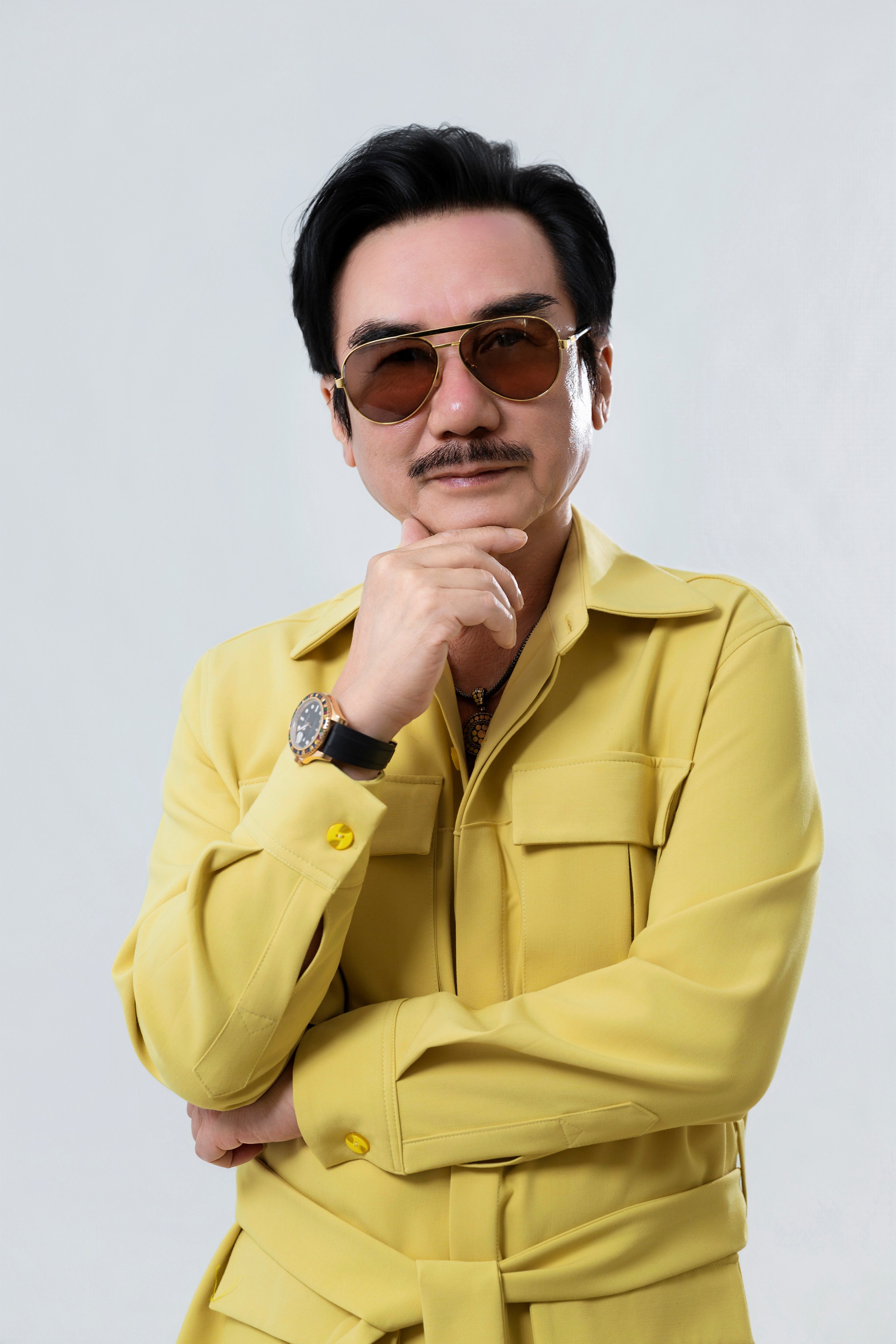 (Đỗ Vẫn Trọn, Photo by Thái Thanh Tùng)
There are lives that can be explained by a profession, a hometown, a business card. Do Van Tron’s is not one of them. To describe him only as a poet is to miss the publisher. To call him a publisher is to overlook the refugee. To remember the refugee is to forget the philanthropist who later helped restore sight to thousands. His story begins in the Vietnamese highlands, crosses the South China Sea, and eventually settles in the freeways, studios and immigrant neighborhoods of California, where a displaced young man built a Vietnamese-language media network and a literary life that has stretched across more than four decades.
In the Vietnamese American community, Do is known by several titles: poet, writer, broadcaster, cultural organizer, businessman. But the thread running through all of them is simpler and more enduring: he has spent much of his life trying to keep a language alive. For a community scattered by war and migration, language was more than a tool. It was shelter. It was a map back to home. It was proof that a people had carried something essential with them across the ocean.
Every life has a place where it begins. For Do Van Tron, that place was Pleiku, the misty highland city of red earth, pine hills and slow evenings. Long after he moved to the United States, Pleiku continued to appear in his poems and prose not as scenery but as a pulse. The old slopes, mountain rains and childhood roads became part of the emotional geography of his work. A person can leave a homeland by foot, by boat, by airplane. But some landscapes never leave the soul.
Yet the place that altered the course of Do’s life was not Pleiku, nor even Saigon, where he studied as a child. It was the sea. After 1975, as millions of Vietnamese lives were remade by loss, separation and uncertainty, Do joined the dangerous exodus of boat people seeking freedom. He attempted the journey 13 times. Thirteen departures. Thirteen confrontations with fear. Thirteen times standing before the horizon with the fragile hope that somewhere beyond it there might be a future.
Some journeys failed. Some were turned back. Some ended before they truly began. But eventually the sea opened a narrow passage. In February 1981, Do reached the refugee camp at Songkhla, Thailand. A few months later, in June, he arrived in California. Pleiku had given him memory. The sea had given him destiny. California gave him the chance to begin again.
He arrived with little more than willpower and the instinct of a writer. In the early years, he contributed to Vietnamese-language publications and worked with well-known literary figures in exile, including the poet Du Tu Le. He wrote for community outlets and contributed to BBC and VOA programming. Those were modest beginnings, but they carried a larger idea: Vietnamese refugees in America needed not only jobs and housing, but also newspapers, radio, music, conversation and a public voice of their own.
In 1982, in San Jose, Do began building what would later become Vien Thao Media. He published Tuan Bao Yeu and the USA Vietnamese Telephone Directory, then expanded into radio, television and entertainment programming. Over time, his work grew into a media system serving Vietnamese communities across the United States, including San Jose, Orange County, Portland, Seattle, Dallas and Atlanta. For many listeners, his stations were not simply commercial outlets. They were morning companions, weekend music halls, community bulletin boards and living archives of a language carried into American life.
For immigrant media, survival has never been easy. Newspapers rise and disappear. Radio stations struggle for advertisers, technical reach and relevance. Younger generations drift toward English. But for decades, Do continued to build, adapt and broadcast. His vision was practical, but also cultural. Vietnamese, he believed, should not be confined to living rooms, cassette tapes and occasional community gatherings. It should travel with people in their cars, along American highways, between work and home, through the ordinary rhythms of daily life.
That ambition made him a recognizable figure beyond the Vietnamese community. The San Jose Mercury News once described him as a 'San Jose media mogul in a strange land,' a phrase that captured not only his success but also the improbability of the journey behind it. A former refugee had entered one of the most difficult and competitive fields in America and carved out a space for a minority language that might otherwise have remained on the margins.
His name also appeared in international biographical references and cultural records, including publications connected with intellectual, literary and media achievement. In 1994, he received a media fellowship from major American magazine organizations to attend a publisher and editor program at New York University. For a man who had once risked his life at sea, stepping into a New York classroom devoted to American publishing was more than professional recognition. It was a sign that a Vietnamese voice had found its way into the institutions of the new country.
A decade later, in 2004, Do received a New California Media Award for essay writing and journalism. Among Vietnamese Americans, the honor carried special meaning because only a small number of Vietnamese media figures had reached that level of recognition in the ethnic press. Do stood in the company of pioneers who helped define Vietnamese-language journalism in exile.
But to stop at media is to offer an incomplete portrait. Behind the broadcaster and publisher was always a poet. Literature came to Do not as an ornament to success, but as a way of preserving what history had scattered: Pleiku, Saigon, the sea, separation, lost loves, old friendships, the ache of memory and the stubborn tenderness of a person who had survived dislocation without surrendering to bitterness.
Across more than 40 years of writing, Do produced poetry, fiction and essays read by Vietnamese audiences in the United States and abroad. His titles include Noi Niem Mang Theo, Mua Pho Nui, Toi Ve Tren Nhung Dam Gai Dam, Thu Gui Dau Yeu and other published and unpublished works. His short story Vet Tram received a literary award in 1985, an early milestone in a writing life that would continue to develop alongside his media career.
His prose is not noisy. It does not chase spectacle. Its force comes from lived experience: the memory of leaving, the dignity of longing, the silence that follows loss, the strange comfort of carrying a homeland inside oneself. For Do, literature has been less a performance than a refuge, a private room where the past can be addressed without being simplified.
Perhaps that is why his poetry found another life in music. Few poets are fortunate enough to see their words carried by major composers and sung by celebrated voices. Do’s poems have been set to music by such prominent Vietnamese composers as Vu Thanh An, Tu Cong Phung, Song Ngoc, Mai Hoai Thu, Tran Duy Duc and others. Songs connected to his poetry and lyrics include Hat Giong Tinh, Sai Gon Buon, Giong Song Buon, San Jose - Anh La Ai, Dem Khong Ngu and Nho Nhau.
Through music, private memory became public feeling. Poems left the page and entered concert halls, recordings and community gatherings. They were performed by well-known singers, including Khanh Ly, Diem Lien, Leu Phuong Anh, Quang Dung, Tran Thu Ha, Cam Van, Quynh Mai, Y Lan, Tuan Ngoc and others. In that transformation, Do became not only a writer of his own sorrow and tenderness, but also a vessel for a wider Vietnamese experience of exile, nostalgia and belonging.
If media was his public work and literature his inner life, philanthropy may be the most quietly luminous part of his story. For decades, Do helped organize cultural programs and benefit concerts to support people affected by storms, floods, poverty, disability and hardship in Vietnam and the United States. In those events, the stage became more than a place for performance. Music became an appeal. Community became a moral act.
The most significant of those efforts was Khoi Nguon Anh Sang, a humanitarian program aimed at helping poor people in Vietnam suffering from cataracts and other conditions that had left them blind or nearly blind. The premise was simple and profound: for many people, a relatively modest operation could restore the ability to see, yet the cost remained beyond reach.
Over time, the program helped bring sight to more than 20,000 poor blind people in more than 20 provinces in Vietnam. Behind that number are older people seeing their grandchildren again, parents returning to work, families regaining a measure of independence and dignity. Do, together with friends and donors, contributed more than $1 million to support the effort. Some achievements are measured by awards. Others by assets or buildings. This one is measured in eyes opened to daylight after years of darkness.
The arc of Do’s life eventually returned to the sea, but in a transformed form. If the sea of his youth was a place of danger, separation and escape, the sea of his later years became a stage for reunion. Through Hoi Ngo Trung Duong, he developed cultural voyages on international cruise ships, gathering Vietnamese from different countries for music, memory, performance and community. The idea carries a striking symbolism: the water that once divided families and scattered a people could also become a place where they meet again.
For the Vietnamese diaspora, the ocean is never just scenery. It holds grief, risk, loss and rescue. To place music and reunion on that same ocean is to change the meaning of the water. It is not to erase the past, but to answer it. The sea that once meant flight becomes a place of return. The waves that once carried fear now carry songs, laughter, language and the possibility of belonging.
Looking back, Do Van Tron appears not as one figure but as many: a poet, a writer, a journalist, a broadcaster, a producer, a businessman, a cultural organizer, a philanthropist. But above all he is a Vietnamese American who built much of his life around the conviction that memory must be protected, language must be spoken, and success is incomplete unless it gives something back.
He did not build monuments of stone. He built radio signals, newspapers, poems, songs, benefit stages and cultural crossings. He helped create places where Vietnamese Americans could hear themselves, remember themselves and recognize one another. He turned words into music and music into connection. He turned community gatherings into acts of compassion. He turned the sea, once a symbol of peril, into a metaphor for reunion.
From Pleiku to Saigon, from the South China Sea to Songkhla, from California’s refugee neighborhoods to broadcast studios and cultural stages across America, Do’s journey belongs not only to him but to a generation of Vietnamese who passed through history’s storm and built new horizons from the fragments that remained.
In the end, the most enduring measure of his life may not be what he accumulated, but what he gave away: a voice, a language, poems, songs, light, and the belief that even after exile, a people can preserve beauty, carry memory and make meaning wherever they land.
The open sea is behind him. The horizons are still ahead.
|


